
Pokémon Card Guides
How to Store Pokémon Cards Properly: The Complete Protection Guide (2026)
Aug
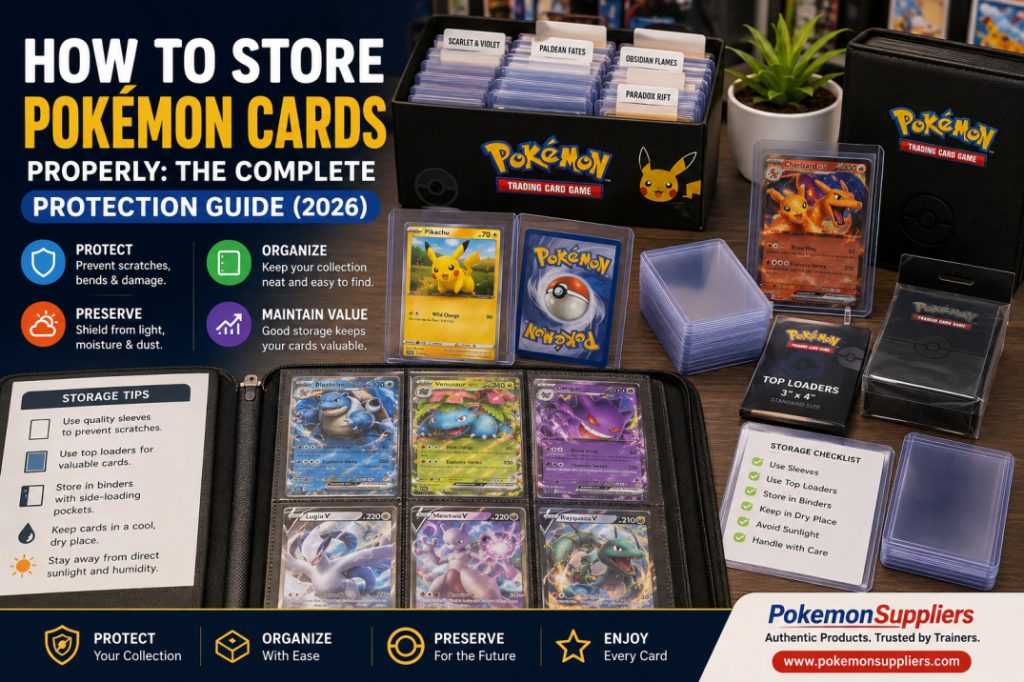
If you’re wondering how to store Pokémon cards, you’re already taking one of the most important steps toward protecting your collection. Whether you’ve just opened your first booster pack or own hundreds of valuable cards, learning how to store Pokémon cards correctly helps prevent scratches, bent corners, fading, moisture damage, and other problems that can reduce both appearance and value. Good storage habits keep your collection organized and ensure your favorite cards remain in excellent condition for years to come.
Many new collectors focus on buying cards but overlook proper storage. Unfortunately, even a small amount of damage can significantly reduce the value of collectible cards. A single crease, bent corner, or scratch may affect a card’s desirability, especially if you plan to keep it for the long term or eventually have it professionally graded.
Fortunately, protecting your collection doesn’t have to be complicated. With a few basic supplies and the right storage methods, you can preserve your cards whether you collect for fun, competitive play, or investment.
In this guide, you’ll learn how to store Pokémon cards safely, choose the best storage products, organize your collection efficiently, and avoid the most common mistakes that lead to damaged cards.
Why Proper Pokémon Card Storage Matters
Pokémon cards are printed on durable cardstock, but they are not indestructible. Everyday handling, poor storage conditions, and environmental factors can gradually damage even the highest-quality cards.
Proper storage helps protect against:
- Scratches
- Bent corners
- Surface wear
- Moisture
- Dust
- Sunlight
- Warping
- Accidental spills
Collectors who develop good storage habits from the beginning often find that their cards remain in near-mint condition for many years.
Whether your collection contains inexpensive Common cards or premium Illustration Rare cards, every card benefits from proper protection.
Decide Which Cards Need the Most Protection
Not every Pokémon card requires the same level of protection.
Organizing your collection into categories helps determine how each card should be stored.
Everyday Cards
Cards used regularly for gameplay should be protected with sleeves but remain easily accessible.
Collection Cards
Cards displayed in binders deserve additional protection because they are handled less frequently.
High-Value Cards
Rare vintage cards, valuable promotional cards, and premium modern pulls should receive the highest level of protection available.
Many collectors immediately sleeve valuable cards as soon as they are pulled from a booster pack.
Use Soft Card Sleeves First
One of the easiest ways to protect Pokémon cards is by placing them into soft protective sleeves.
Soft sleeves help prevent:
- Surface scratches
- Fingerprints
- Minor edge wear
- Dust accumulation
Whenever you pull an especially valuable card, sleeve it before placing it on a table or showing it to friends.
Even careful handling can leave small scratches over time.
Top Loaders Provide Extra Protection
Soft sleeves protect the card surface, but they do not prevent bending.
For valuable cards, many collectors insert sleeved cards into rigid plastic top loaders.
Top loaders help protect against:
- Bent corners
- Pressure damage
- Accidental drops
- Everyday handling
This combination of sleeve plus top loader has become one of the most common storage methods among experienced collectors.
Should You Use a Binder?
Binders remain one of the best ways to organize Pokémon collections.
However, choosing the right binder makes a significant difference.
Look for binders that include:
- Side-loading pockets
- Acid-free pages
- Archival-quality materials
- Strong zippers
Avoid inexpensive binders that use metal rings because they may damage cards over time if pages become misaligned.
Binders work especially well for collectors completing expansion sets or organizing cards by rarity.
Keep Cards Away from Moisture
Humidity is one of the biggest enemies of collectible cards.
Excess moisture can cause:
- Warping
- Mold
- Paper separation
- Staining
Store your collection in a cool, dry room away from bathrooms, kitchens, and damp basements.
If you live in a humid climate, silica gel packets placed inside storage containers can help reduce excess moisture.
Avoid Direct Sunlight
Sunlight may seem harmless, but prolonged exposure to ultraviolet (UV) rays can permanently fade Pokémon cards.
Over time, direct sunlight may cause:
- Faded colors
- Yellowing
- Surface damage
- Reduced collector appeal
Always store your collection away from windows or use UV-protective display cases for cards on display.
Use Magnetic Card Holders for Premium Cards
If you own particularly valuable Pokémon cards, magnetic card holders offer an extra layer of protection. These rigid cases close securely with built-in magnets, helping shield cards from bending, dust, and accidental handling.
Many collectors use magnetic holders for:
- Vintage holographic cards
- Special Illustration Rare cards
- Hyper Rare cards
- Limited promotional cards
- Autographed cards
Before placing a card into a magnetic holder, insert it into a soft sleeve if the holder is designed to accommodate one. This additional layer helps reduce the risk of surface scratches.
Store Graded Cards Correctly
Professionally graded cards are already protected inside tamper-evident holders, but they still require proper storage.
Avoid stacking large numbers of graded slabs directly on top of one another because excessive weight can cause scratches on the plastic cases.
Instead, store graded cards:
- Upright in dedicated storage boxes
- Inside display cases
- On stable shelving
- Away from direct sunlight
- In climate-controlled rooms
Even though the card itself is protected, keeping the slab in excellent condition helps preserve its presentation and resale appeal.
Organize Your Collection in a Way That Makes Sense
As your collection grows, staying organized becomes just as important as protecting your cards.
There isn’t a single correct method. Choose an organization system that matches your collecting style.
Many collectors organize by:
Expansion Set
This is one of the most popular methods.
For example:
- Scarlet & Violet
- Paldean Fates
- Twilight Masquerade
- Surging Sparks
Pokédex Number
Collectors who enjoy seeing Pokémon evolve naturally often organize cards according to the National Pokédex.
Pokémon Type
Some binders group Pokémon by type:
- Fire
- Water
- Grass
- Electric
- Psychic
- Dragon
Card Rarity
Another common method is organizing cards by rarity.
This allows premium cards to stand out while making valuable additions easier to locate.
Whatever system you choose, remain consistent as your collection expands.
Handle Your Cards Carefully
Proper storage begins with proper handling.
Even the best storage supplies cannot prevent damage caused by careless handling.
When examining cards:
- Wash and dry your hands first.
- Hold cards by the edges.
- Avoid touching the artwork.
- Never place cards directly on rough surfaces.
- Keep food and drinks away from your collection.
These simple habits significantly reduce everyday wear.
Keep Your Collection in a Stable Environment
Environmental conditions have a greater impact on Pokémon cards than many collectors realize.
The ideal storage environment is:
- Cool
- Dry
- Clean
- Stable in temperature
- Away from direct sunlight
Avoid storing cards in places such as:
- Attics
- Garages
- Basements
- Cars
- Near heaters
- Close to air-conditioning vents
Frequent temperature changes can cause cards to expand and contract, increasing the risk of warping over time.
Should You Display Valuable Pokémon Cards?
Displaying favorite cards can be a great way to enjoy your collection, but it should be done carefully.
Choose display cases that provide:
- UV protection
- Dust protection
- Secure mounting
- Stable support
Keep displays away from windows where sunlight may fade colors over time.
Rotating displayed cards every few months can also reduce prolonged light exposure.
Common Pokémon Card Storage Mistakes
Many damaged collections result from a few avoidable mistakes.
Here are some of the most common:
Storing Cards Loose
Loose cards easily become scratched, bent, or misplaced.
Overfilling Binder Pages
Stuffing multiple cards into one pocket stretches the page and can damage corners.
Using Poor-Quality Supplies
Low-quality sleeves and binders may contain materials that damage cards over time.
Choose archival-safe products whenever possible.
Ignoring Humidity
High humidity can permanently damage even valuable collections.
Constant Handling
Repeatedly removing cards from sleeves or binders increases the risk of scratches and edge wear.
The less unnecessary handling your collection receives, the better.
Build Good Habits Early
One of the biggest advantages new collectors have is the opportunity to establish good habits from the beginning.
If every valuable card is immediately:
- Sleeved
- Stored safely
- Organized properly
- Kept in a suitable environment
your collection will remain in excellent condition as it grows.
These small habits often make the biggest difference over many years of collecting.
Final Thoughts
Learning how to store Pokémon cards properly is one of the smartest investments any collector can make. While rare cards often receive the most attention, every card benefits from careful handling, quality storage supplies, and a stable environment.
By using protective sleeves, rigid holders, archival-quality binders, and proper storage conditions, you can greatly reduce the risk of scratches, bending, fading, and moisture damage. Good organization also makes your collection easier to enjoy, expand, and maintain over time.
Whether your goal is to complete full expansion sets, preserve childhood memories, or protect valuable collectibles for the future, proper storage ensures your Pokémon cards remain in the best possible condition. Developing these habits today will help your collection continue to look its best for many years to come.
Frequently Asked Questions
1. What is the best way to store Pokémon cards?
The best method is to place cards in protective sleeves and store them in archival-quality binders, top loaders, or magnetic holders in a cool, dry environment.
2. Should I sleeve every Pokémon card?
You don’t have to sleeve every card, but valuable, favorite, or frequently handled cards should always be protected.
3. Are binders safe for Pokémon cards?
Yes, provided you use high-quality binders with side-loading, acid-free pages and avoid overfilling the pockets.
4. Can humidity damage Pokémon cards?
Yes. Excess humidity can cause warping, mold, paper separation, and other forms of permanent damage.
5. Is direct sunlight bad for Pokémon cards?
Yes. Long-term exposure to sunlight can fade colors and reduce the appearance and collectibility of your cards.
6. Should I use top loaders or magnetic holders?
Top loaders are excellent for everyday protection, while magnetic holders are often preferred for premium or display-worthy cards.
7. How should I store graded Pokémon cards?
Store graded cards upright in dedicated storage boxes or display cases, away from direct sunlight and excessive heat.
8. Is it safe to stack Pokémon cards?
Loose stacks increase the risk of scratches and bent corners. It’s better to store cards individually in sleeves, binders, or rigid holders.
9. What temperature is best for storing Pokémon cards?
A cool, dry room with stable temperatures is ideal. Avoid attics, garages, and other areas with significant temperature fluctuations.
10. Can proper storage increase a card’s value?
Storage doesn’t increase a card’s value directly, but it helps preserve the condition that collectors and buyers look for, supporting its long-term market appeal.
