
Pokémon Card Guides
Pokémon Card Sizes, Sleeves & Top Loaders Explained: The Complete Protection Guide (2026)
Aug
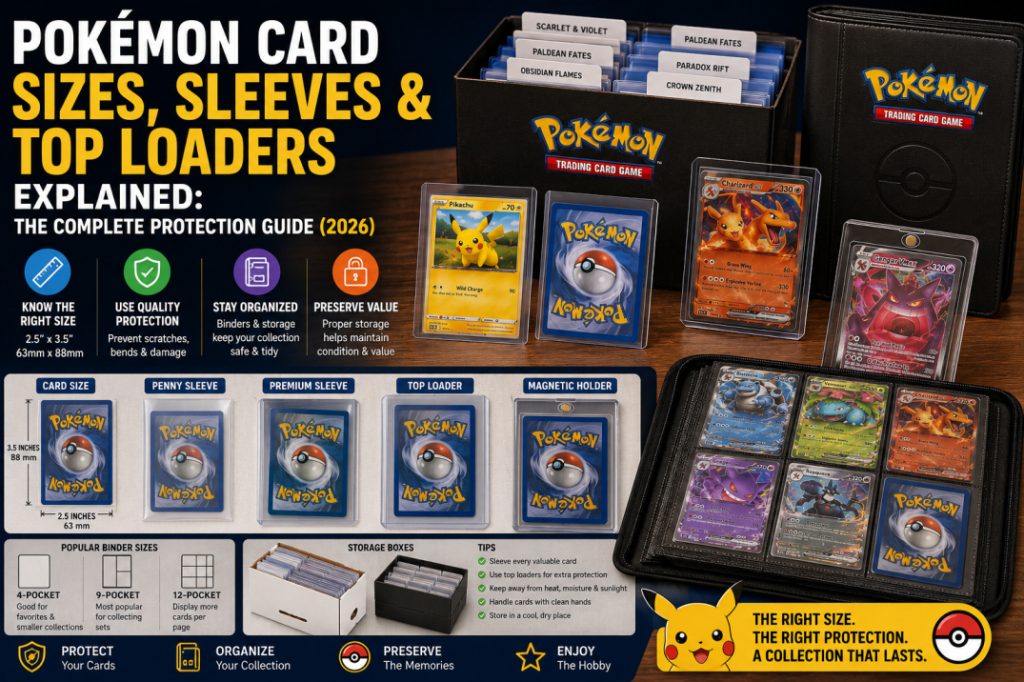
Understanding Pokémon card size is one of the first things every collector should learn before purchasing sleeves, binders, top loaders, or storage cases. Choosing accessories that don’t match the official Pokémon card size can lead to bent corners, loose-fitting sleeves, unnecessary wear, and long-term damage. Whether you’ve just started collecting or you’re looking to better protect a growing collection, using the correct accessories helps keep your cards in excellent condition for years to come.
Although Pokémon cards may look similar to other trading cards, not every protective product fits them equally well. Card sleeves come in different sizes, binders vary in pocket dimensions, and top loaders are available in multiple thicknesses. Knowing which products are compatible with the standard Pokémon card size helps you avoid expensive mistakes and keeps your collection organized.
In this guide, you’ll learn the official Pokémon card dimensions, how different protective products work, how to choose the best sleeves and top loaders, and which storage methods provide the best long-term protection.
What Is the Official Pokémon Card Size?
The official Pokémon card size used for the English Pokémon Trading Card Game is:
- 2.5 inches × 3.5 inches
- 63 mm × 88 mm
This is commonly known as the standard trading card size.
Every official English Pokémon card follows these dimensions, including:
- Basic Pokémon
- Pokémon ex
- Trainer cards
- Energy cards
- Holographic cards
- Special Illustration Rare cards
- Promotional cards
Because Pokémon cards follow a standard size, most accessories designed for standard trading cards will fit correctly.
Knowing the official Pokémon card size makes shopping for protective supplies much easier.
Do Japanese Pokémon Cards Have the Same Size?
One question new collectors often ask is whether Japanese Pokémon cards are different sizes.
The answer is simple.
Japanese Pokémon cards use the same official card dimensions as English Pokémon cards.
Although the artwork, card text, and release schedules may differ, the physical card size remains consistent.
This means you can use the same sleeves, binders, and top loaders for both English and Japanese Pokémon cards.
Why the Correct Sleeve Size Matters
Card sleeves provide the first layer of protection for your collection.
Using sleeves that are too large allows cards to move around inside the sleeve.
Using sleeves that are too small may damage the card during insertion.
Properly fitted sleeves help protect against:
- Scratches
- Fingerprints
- Dust
- Minor spills
- Surface wear
Good sleeves are inexpensive compared to replacing damaged collectible cards.
For most collectors, sleeving valuable cards immediately after opening booster packs becomes a lifelong habit.
Penny Sleeves
Penny sleeves are thin, transparent plastic sleeves designed for everyday protection.
They are affordable and widely used throughout the hobby.
Advantages include:
- Low cost
- Lightweight protection
- Easy to replace
- Compatible with top loaders
Many collectors place every valuable pull into a penny sleeve before using any additional protective storage.
Premium Card Sleeves
Premium sleeves use thicker materials than penny sleeves.
These sleeves often provide:
- Better durability
- Improved clarity
- Stronger corner protection
- Better shuffle feel
Competitive players frequently prefer premium sleeves because they withstand repeated gameplay.
Collectors also appreciate their improved appearance when displaying valuable cards.
Inner Sleeves
Some collectors choose to double-sleeve valuable cards.
This involves placing the card into a snug inner sleeve before inserting it into a standard outer sleeve.
Double sleeving provides additional protection against:
- Dust
- Moisture
- Small particles
- Everyday handling
Although not necessary for every card, double sleeving is common for premium collectibles.
What Are Top Loaders?
Top loaders are rigid plastic holders designed to prevent cards from bending.
Unlike flexible sleeves, top loaders help protect cards from physical pressure.
Most collectors use top loaders for:
- Valuable pulls
- Vintage cards
- Cards awaiting grading
- Cards being traded
- Cards shipped through the mail
For maximum protection, always insert the card into a soft sleeve before placing it inside a top loader.
This combination greatly reduces the risk of scratches.
Magnetic Card Holders
Magnetic holders provide one of the highest levels of protection available for raw Pokémon cards.
These holders use two rigid acrylic panels that close securely with built-in magnets.
Collectors commonly use them for:
- High-value cards
- Display pieces
- Personal favorites
- Limited promotional cards
Magnetic holders also create an attractive presentation for display shelves.
Choosing the Right Binder
Binders remain one of the most popular ways to organize Pokémon collections.
However, not every binder offers the same level of protection.
High-quality binders typically include:
- Side-loading pockets
- Acid-free pages
- Archival-safe materials
- Secure zipper closures
Side-loading pockets help reduce the risk of cards sliding out during transport.
Many experienced collectors avoid traditional three-ring binders because metal rings may damage cards if pages shift.
Single-Pocket vs. Multi-Pocket Pages
Collectors can choose from several binder layouts.
Common options include:
4-Pocket Pages
Ideal for:
- Small collections
- Favorite Pokémon
- Promotional cards
9-Pocket Pages
The most common choice for Pokémon collectors.
Excellent for:
- Expansion sets
- Master sets
- Large collections
12-Pocket Pages
Designed for collectors who want to display larger portions of their collection on each page.
Choosing the right binder size depends on your collecting goals rather than card dimensions alone.
Storage Boxes
Binders work well for display collections, but storage boxes remain useful for large numbers of duplicate cards.
Many collectors organize storage boxes by:
- Expansion
- Card number
- Pokémon type
- Rarity
- Alphabetical order
Dividers make finding specific cards much easier as collections continue growing.
Should You Double Sleeve Every Card?
Not necessarily.
Double sleeving offers excellent protection, but many collectors reserve it for:
- Expensive cards
- Tournament decks
- Rare promotional cards
- Cards with sentimental value
For everyday collection cards, a quality sleeve is often more than sufficient.
One-Touch Magnetic Holders vs. Top Loaders
Many collectors eventually wonder whether they should use top loaders or one-touch magnetic holders.
Both provide excellent protection, but each serves a different purpose.
Top Loaders
Top loaders are an affordable solution for protecting cards during storage, trading, and shipping.
Advantages include:
- Budget-friendly
- Lightweight
- Easy to stack
- Excellent for mailing cards
- Available in different thicknesses
Many collectors use top loaders for newly opened cards until they decide whether to add them to a binder or submit them for grading.
One-Touch Magnetic Holders
One-touch magnetic holders offer premium protection and presentation.
Benefits include:
- Crystal-clear display
- Strong magnetic closure
- Excellent rigidity
- Ideal for showcasing valuable cards
- Reduced handling
These holders are especially popular for display pieces because they allow collectors to enjoy their favorite cards while keeping them protected.
How to Protect Cards During Transport
Whether you’re attending a local Pokémon League event, meeting another collector, or shipping cards to a grading company, transportation presents additional risks.
To keep your cards safe while traveling:
- Place each valuable card in a soft sleeve.
- Use a top loader or semi-rigid card holder for extra support.
- Store cards inside a sturdy deck box or carrying case.
- Prevent movement by filling empty space inside the container.
- Keep cards away from excessive heat or direct sunlight during transport.
A little preparation greatly reduces the chance of bent corners, scratches, or pressure damage.
Choosing the Right Accessories for Your Budget
Protecting your collection doesn’t require spending a fortune.
Instead, buy accessories that match the value of your cards.
Beginner Collectors
Start with:
- Penny sleeves
- A quality side-loading binder
- A storage box for duplicates
Intermediate Collectors
Consider adding:
- Premium sleeves
- Top loaders
- Dividers
- Deck boxes
Advanced Collectors
Collectors with high-value cards often invest in:
- One-touch magnetic holders
- Display cases
- Humidity-control products
- Premium storage cases
As your collection grows, you can gradually upgrade your storage system without replacing everything at once.
How Often Should You Replace Sleeves?
Protective sleeves don’t last forever.
If you notice:
- Cloudy plastic
- Scratches
- Tears
- Loose fit
- Dirt inside the sleeve
it’s time to replace them.
Replacing an inexpensive sleeve is much better than risking damage to the card inside.
Many collectors inspect their most valuable cards once or twice a year to ensure the sleeves and storage materials remain in good condition.
Common Mistakes When Protecting Pokémon Cards
Even experienced collectors occasionally make mistakes.
Fortunately, most are easy to avoid.
Using the Wrong Sleeve Size
Oversized sleeves allow cards to slide around, while undersized sleeves may damage corners during insertion.
Always choose sleeves designed for standard-size trading cards.
Placing Unsleeved Cards in Top Loaders
Rigid plastic can scratch card surfaces if the card moves inside.
A soft sleeve should always come first.
Overfilling Binders
Adding too many cards to one binder page stretches the pockets and increases pressure on the cards.
One card per pocket is the safest approach.
Storing Cards in Hot Areas
Heat and humidity can permanently warp cards.
Avoid storing collections in garages, attics, or vehicles.
Handling Cards Too Frequently
Even clean hands contain natural oils.
Repeated handling gradually increases wear.
Only remove valuable cards from their protective holders when necessary.
How to Store Sealed Pokémon Products
Many collectors eventually add sealed products to their collections.
Booster boxes, Elite Trainer Boxes, collection boxes, and promotional products should also be stored carefully.
Keep sealed products:
- Upright whenever possible
- Away from direct sunlight
- In cool, dry rooms
- Protected from excessive weight
- Inside clean storage cabinets or shelving
Avoid stacking heavy boxes on top of one another, as this can crush packaging over time.
Collectors interested in preserving sealed products often keep the original shrink wrap intact because it helps maintain authenticity and display appeal.
Building a Long-Term Protection Routine
Protecting Pokémon cards isn’t something you do only once.
It’s an ongoing habit.
A simple routine might include:
- Sleeving valuable cards immediately after opening packs.
- Organizing new cards before adding them to your binder.
- Checking storage boxes for excess humidity.
- Replacing worn sleeves when needed.
- Cleaning display shelves regularly.
- Reviewing your collection every few months.
These small habits require very little time but make a significant difference over the life of your collection.
Final Thoughts
Understanding the official Pokémon card size is the foundation of protecting your collection. Once you know the correct dimensions, choosing sleeves, top loaders, binders, magnetic holders, and storage boxes becomes much easier.
Every collection is different, but the goal remains the same: keep your cards clean, protected, and organized. Whether you’re preserving childhood memories, completing expansion sets, or collecting rare cards, the right protective supplies help maintain both appearance and long-term value.
The best collectors aren’t simply those with the rarest cards—they’re the ones who care for their collections consistently. By investing in quality storage products and developing good habits early, you’ll ensure your Pokémon cards remain in outstanding condition for many years to come.
Frequently Asked Questions
1. What is the official Pokémon card size?
The standard Pokémon card size is 2.5 inches × 3.5 inches (63 × 88 mm), matching the standard dimensions used for most trading card games.
2. Do Japanese Pokémon cards use the same dimensions?
Yes. Japanese Pokémon cards use the same physical card size as English Pokémon cards.
3. What size sleeves should I buy for Pokémon cards?
Choose sleeves designed for standard-size trading cards measuring approximately 63 × 88 mm.
4. Should I use penny sleeves or premium sleeves?
Penny sleeves are excellent for basic protection, while premium sleeves provide greater durability and are often preferred for gameplay or valuable cards.
5. Are top loaders better than binders?
They serve different purposes. Top loaders offer superior protection for individual cards, while binders are ideal for organizing and displaying larger collections.
6. Should I double sleeve expensive Pokémon cards?
Yes. Double sleeving adds another layer of protection against dust, moisture, and handling, making it a popular choice for valuable cards.
7. Can oversized sleeves damage Pokémon cards?
Oversized sleeves usually won’t damage cards, but they allow unnecessary movement that can increase wear over time.
8. Are magnetic holders safe for Pokémon cards?
Yes. High-quality magnetic holders provide excellent protection and are ideal for displaying valuable raw cards.
9. How should I transport valuable Pokémon cards?
Use a soft sleeve, place the card in a top loader or semi-rigid holder, and transport it inside a sturdy protective case.
10. How often should I replace protective sleeves?
Inspect sleeves regularly and replace them whenever they become scratched, cloudy, torn, or excessively worn.
