
Graded Cards
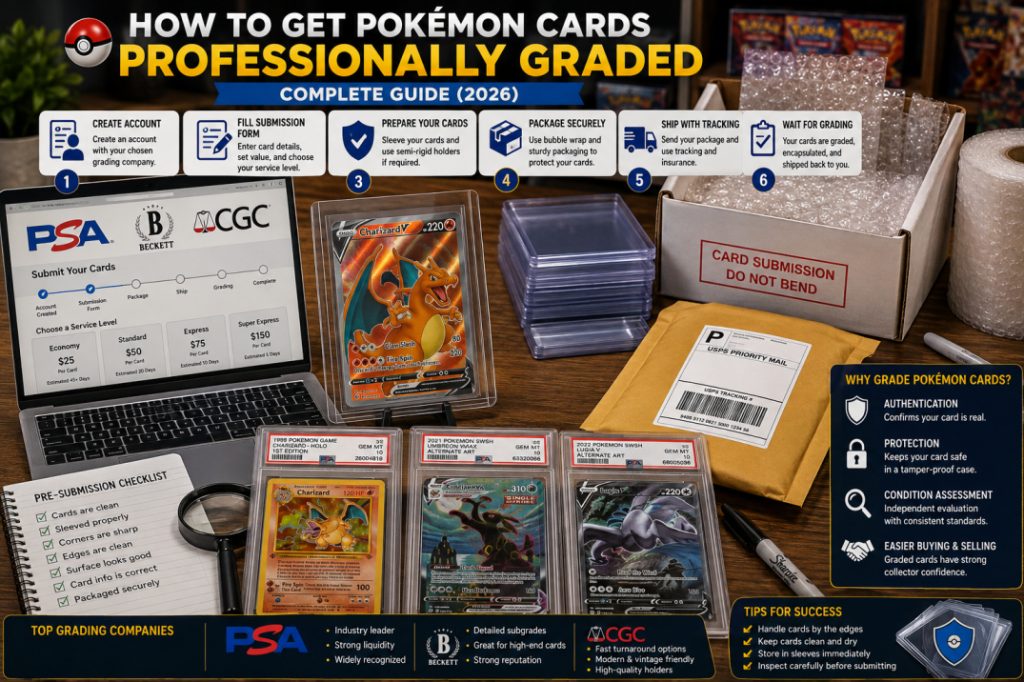
How to Get Pokémon Cards Professionally Graded: Complete Guide (2026)
Aug
Learning how to grade Pokémon cards is an important step for collectors who want to authenticate valuable cards, better understand their condition, or preserve them for the future. Professional grading provides an independent evaluation of a card’s quality and places it in a tamper-evident protective holder, giving collectors greater confidence in its authenticity and condition. Whether you own a vintage classic or a modern chase card, understanding how to grade Pokémon cards helps you decide when grading is appropriate and how to prepare your cards for submission.
Professional grading has become one of the most important parts of the Pokémon collecting hobby. Many buyers prefer professionally graded cards because they have been examined using consistent grading standards. At the same time, grading helps protect valuable cards from handling, dust, moisture, and accidental damage.
This guide explains the complete grading process, the major grading companies, how to prepare your cards before submission, and the most common mistakes collectors should avoid.
What Is Pokémon Card Grading?
Pokémon card grading is the process of having a trading card professionally examined by an independent grading company.
During the grading process, specialists carefully inspect the card before assigning it a numerical grade based on its overall condition.
After grading is complete, the card is sealed inside a durable protective holder, often called a slab.
The holder typically includes:
- Card name
- Expansion
- Certification number
- Numerical grade
- Barcode or verification information
This makes it easier for collectors to identify and protect valuable cards.
Why Do Collectors Grade Pokémon Cards?
There are several reasons collectors choose professional grading.
Authentication
Professional grading helps confirm that a card is genuine.
Authentication provides additional confidence for both collectors and future buyers.
Protection
Once graded, cards are sealed inside durable protective holders.
These holders help protect cards from:
- Scratches
- Moisture
- Dust
- Fingerprints
- Everyday handling
Condition Assessment
Grading companies evaluate cards using consistent standards.
Instead of relying only on personal opinions, collectors receive an independent assessment of the card’s condition.
Easier Buying and Selling
Many collectors prefer buying professionally graded cards because they know the card has already been authenticated and evaluated.
This often simplifies transactions between collectors.
When Should You Grade a Pokémon Card?
Not every Pokémon card needs professional grading.
Before submitting a card, consider several important factors.
Card Value
Grading is generally more appropriate for cards that already have meaningful collector interest.
Examples include:
- Rare promotional cards
- Vintage holographic cards
- Special Illustration Rare cards
- Limited edition releases
Card Condition
Cards in excellent condition are often stronger candidates for grading.
Inspect your card carefully for:
- Surface scratches
- Corner wear
- Edge damage
- Centering
- Creases
A card with significant damage may not benefit from grading.
Personal Importance
Some collectors grade cards simply because they have sentimental value.
Childhood favorites, memorable pulls, or special gifts can all deserve professional preservation regardless of market value.
Understanding Grading Standards
Although each grading company uses its own evaluation process, they generally examine similar characteristics.
Centering
Centering measures how evenly the artwork appears within the borders of the card.
Well-centered cards generally receive stronger evaluations.
Corners
Sharp corners are an important part of overall card condition.
Rounded or damaged corners may affect the final grade.
Edges
Graders inspect the card edges for:
- Whitening
- Chipping
- Wear
- Manufacturing defects
Clean edges usually contribute to higher grades.
Surface
The card surface is carefully examined for:
- Scratches
- Print defects
- Dirt
- Indentations
- Stains
Even small imperfections can influence the final grade.
Understanding the Grading Scale
Most professional grading companies use a numerical grading scale ranging from 1 to 10.
Although grading standards vary slightly between companies, the general interpretation remains similar.
Gem Mint (10)
A Gem Mint card is considered virtually flawless under professional grading standards.
These cards typically display:
- Excellent centering
- Sharp corners
- Clean edges
- Nearly perfect surfaces
Mint (9)
Mint cards remain in outstanding condition with only extremely minor imperfections.
Many collectors consider Mint cards excellent additions to their collections.
Near Mint (7–8)
Near Mint cards remain highly collectible while showing only light signs of wear.
Many modern cards fall into this category after careful handling.
Lower Grades
Cards with more noticeable wear, creases, scratches, or surface damage generally receive lower numerical grades.
Even lower-graded cards may remain highly collectible if they are exceptionally rare or historically significant.
The Major Pokémon Card Grading Companies
Several professional grading companies are respected throughout the hobby.
PSA (Professional Sports Authenticator)
PSA remains one of the best-known grading companies for Pokémon cards.
Collectors appreciate PSA for:
- Consistent grading standards
- Strong collector recognition
- Widely accepted authentication
- Durable holders
Many vintage Pokémon collectors choose PSA because of its long history within the hobby.
Beckett Grading Services (BGS)
Beckett is especially well known for detailed subgrades.
Depending on the submission, collectors may receive separate evaluations for:
- Centering
- Corners
- Edges
- Surface
These subgrades provide additional insight into a card’s overall condition.
Certified Guaranty Company (CGC)
CGC has become increasingly popular among Pokémon collectors.
Collectors value CGC because of:
- Professional authentication
- High-quality holders
- Competitive turnaround options
- Strong reputation
Today, CGC remains one of the leading choices for modern Pokémon cards.
Preparing Your Pokémon Cards for Grading
Proper preparation helps reduce unnecessary risks during shipping and handling.
Before submitting cards:
- Wash and dry your hands.
- Inspect each card carefully.
- Place cards in clean protective sleeves.
- Use semi-rigid card holders if required by the grading company.
- Avoid touching the card surface.
- Follow the grading company’s submission instructions.
Careful preparation helps ensure your cards arrive safely.
How to Submit Pokémon Cards for Grading
Once you’ve selected a grading company and prepared your cards, the submission process is usually straightforward.
Although the exact steps vary slightly by company, the overall process is similar.
Step 1: Create an Account
Visit the grading company’s official website and create a customer account.
Most companies allow you to manage submissions, track orders, and review grading results online.
Step 2: Complete the Submission Form
You’ll be asked to provide information such as:
- Card name
- Expansion or set
- Card number
- Declared value
- Quantity of cards
Accurate information helps the grading company process your submission efficiently.
Step 3: Package Your Cards Carefully
Proper packaging is essential for protecting your cards during shipping.
Many collectors use:
- Soft card sleeves
- Semi-rigid card holders (if recommended)
- Bubble wrap
- Sturdy cardboard protection
- Secure shipping boxes
Avoid using excessive tape directly on card holders, as it may complicate the grading process.
Step 4: Ship with Tracking
Always choose a shipping service that provides tracking.
For high-value cards, additional insurance may provide extra peace of mind during transit.
Step 5: Wait for Grading
After your package arrives, the grading company will:
- Receive the submission
- Verify the contents
- Grade each card
- Encapsulate graded cards
- Prepare the return shipment
Once completed, your graded cards are shipped back in protective slabs.
How Long Does Pokémon Card Grading Take?
Turnaround times vary depending on:
- The grading company
- Service level selected
- Number of submitted cards
- Overall submission volume
Economy services generally take longer than premium options, while express services are designed for collectors who need faster processing.
Before submitting cards, review the grading company’s current estimated turnaround times to help set realistic expectations.
Common Mistakes to Avoid
Many collectors accidentally reduce their chances of receiving strong grades by making a few avoidable mistakes.
Submitting Damaged Cards
Not every card benefits from professional grading.
Cards with heavy scratches, creases, or water damage may not justify grading costs.
Inspect each card carefully before deciding to submit it.
Failing to Inspect the Card
Some imperfections are difficult to notice without proper lighting.
Examine your card from multiple angles before shipping it.
Pay close attention to:
- Surface scratches
- Print defects
- Whitening
- Corner wear
- Edge chipping
Improper Packaging
Poor packaging increases the risk of damage during shipping.
Using quality sleeves, protective holders, and sturdy shipping materials helps keep cards safe throughout the journey.
Expecting Every Card to Receive a Perfect Grade
Even carefully protected cards may contain factory imperfections.
Professional grading is based on the actual condition of each card rather than collector expectations.
Receiving a grade lower than anticipated doesn’t necessarily mean something went wrong.
Is Professional Grading Worth It?
Whether grading is worthwhile depends on your collecting goals.
Professional grading may be beneficial if:
- You own valuable cards.
- You want authentication.
- You plan to preserve important cards.
- You intend to sell premium collectibles in the future.
- You enjoy collecting professionally graded cards.
On the other hand, grading every card in your collection is rarely necessary.
Many common cards can be enjoyed perfectly well without professional grading.
Tips for Improving Your Chances of a Higher Grade
While no one can guarantee a specific grade, good collecting habits can help preserve your cards.
Consider these practices:
- Sleeve valuable cards immediately.
- Handle cards only by the edges.
- Store cards in cool, dry conditions.
- Keep cards away from direct sunlight.
- Avoid unnecessary handling.
- Use quality storage products.
Cards that remain in excellent condition over time are generally stronger candidates for grading.
After Your Cards Return
Once your graded cards arrive, inspect the slabs carefully.
Verify that:
- The certification information is correct.
- The slab is free from damage.
- The card matches the label.
Many grading companies also provide online certification lookup tools, allowing collectors to verify certification numbers and confirm the authenticity of graded cards.
Store graded cards in a clean, dry environment away from excessive heat, humidity, and direct sunlight to help preserve both the slab and the card inside.
Building a Graded Pokémon Collection
Many collectors eventually decide to focus part of their collection on professionally graded cards.
Some build collections around:
- Favorite Pokémon
- Specific expansions
- Vintage cards
- Modern chase cards
- High grades
- Promotional releases
A focused collecting strategy often makes building a meaningful collection more enjoyable than simply chasing every available card.
Final Thoughts
Learning how to grade Pokémon cards helps collectors make informed decisions about protecting and authenticating their most valuable collectibles. Professional grading provides an independent assessment of a card’s condition while placing it in a secure protective holder that helps preserve it for years to come.
Whether you’re grading a vintage classic, a modern Special Illustration Rare, or a personal favorite with sentimental value, understanding the grading process makes the experience much less intimidating. Choosing a reputable grading company, preparing your cards carefully, and setting realistic expectations will help you get the most from every submission.
Remember that grading is just one part of the collecting journey. Protecting your cards, storing them properly, and focusing on the Pokémon you enjoy most are equally important for building a collection you’ll appreciate for years to come.
Frequently Asked Questions
1. How do I grade Pokémon cards?
Choose a reputable grading company, complete its submission form, prepare your cards according to its instructions, package them securely, and ship them for professional evaluation.
2. What do grading companies look for?
Most grading companies evaluate centering, corners, edges, and surface condition before assigning a numerical grade.
3. Which grading company is best for Pokémon cards?
PSA, Beckett Grading Services (BGS), and CGC are among the most recognized grading companies used by Pokémon collectors.
4. Should I grade every Pokémon card?
No. Grading is generally most appropriate for valuable, rare, or personally meaningful cards.
5. Can a damaged Pokémon card still be graded?
Yes. Damaged cards can still receive grades, although visible wear usually results in lower numerical grades.
6. How long does Pokémon card grading take?
Turnaround times vary depending on the grading company, service level, and current submission volume.
7. Does grading guarantee a card will increase in value?
No. Grading can improve buyer confidence and protect a card, but market demand and condition continue to influence value.
8. How should I prepare cards before grading?
Use clean sleeves, appropriate protective holders, handle cards by the edges, and follow the grading company’s packaging instructions.
9. What is a Gem Mint 10 grade?
Gem Mint 10 represents the highest grade used by many grading companies and indicates an exceptionally well-preserved card under their grading standards.
10. Are graded Pokémon cards easier to sell?
Many collectors appreciate professionally graded cards because they include authentication and a standardized assessment of condition, which can make buying and selling more straightforward.
