
Graded Cards
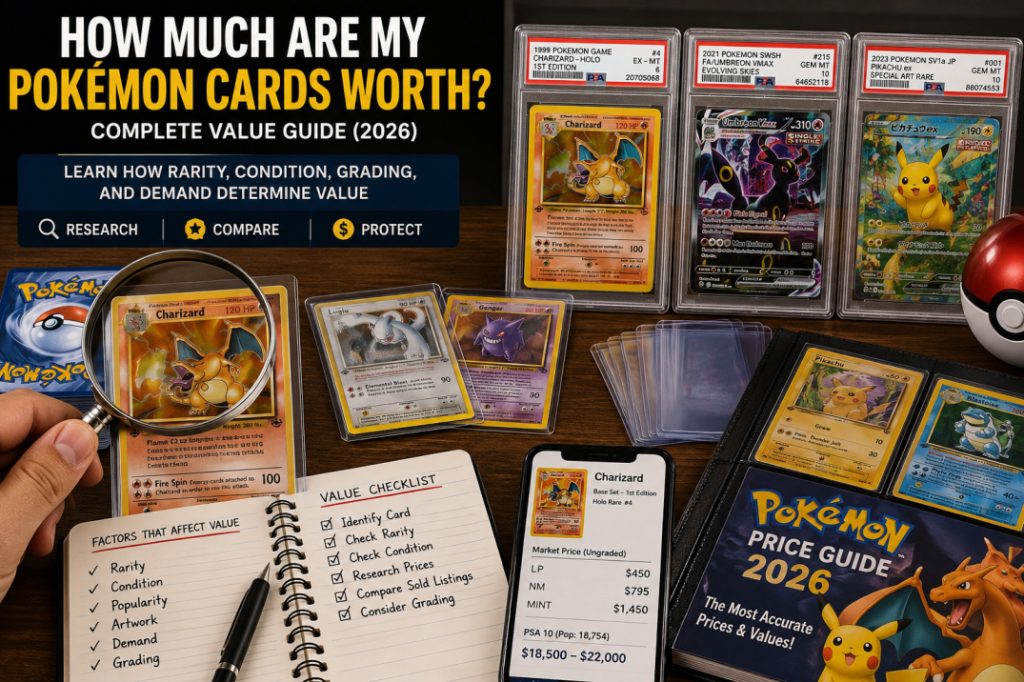
How Much Are My Pokémon Cards Worth? Complete Value Guide (2026)
Aug
If you’ve ever asked yourself, “How much are my Pokémon cards worth?”, you’re not alone. Every day, collectors across the United States discover old binders, open new booster packs, or uncover rare promotional cards and wonder whether they own something valuable. The answer depends on several factors, including rarity, condition, grading, demand, and the specific Pokémon featured on the card. Understanding how much your Pokémon cards are worth begins with knowing what collectors and the market actually look for.
Many people assume that every old Pokémon card is valuable, but that’s not always true. Likewise, some modern cards have become highly sought after only months after their release because of exceptional artwork, limited pull rates, or strong competitive play. Learning how card values are determined will help you make smarter collecting decisions and avoid common mistakes when evaluating your collection.
In this guide, we’ll explain the biggest factors that influence Pokémon card values, how to identify cards with strong collector appeal, and where to begin researching the value of your collection in 2026.
Why Pokémon Card Values Vary
One of the biggest surprises for new collectors is that two cards featuring the same Pokémon can have dramatically different values.
For example, one Charizard card might be relatively common, while another featuring the same Pokémon could be one of the hobby’s most desirable collectibles.
Several factors determine a card’s value, including:
- Rarity
- Condition
- Age
- Artwork
- Collector demand
- Print run
- Professional grading
These factors work together to determine how desirable a card is among collectors.
The Biggest Factors That Affect Pokémon Card Values
Understanding what influences value makes it much easier to evaluate your collection.
1. Rarity
Rarity is one of the most important factors.
Generally speaking, cards that are more difficult to obtain attract greater collector interest.
Examples include:
- Illustration Rare cards
- Special Illustration Rare cards
- Hyper Rare cards
- Gold cards
- Promotional cards
- Limited edition releases
However, rarity alone does not guarantee high value.
Collector demand also plays an important role.
2. Pokémon Popularity
Certain Pokémon consistently attract stronger collector interest than others.
Some of the most collectible Pokémon include:
- Charizard
- Pikachu
- Umbreon
- Lugia
- Rayquaza
- Mew
- Eevee and its Evolutions
Cards featuring these Pokémon often receive greater attention from collectors worldwide.
3. Card Condition
Condition has a major impact on value.
Collectors generally prefer cards with:
- Sharp corners
- Clean edges
- Minimal scratches
- Strong centering
- Bright colors
- Clean surfaces
Even a rare card may lose significant value if it has noticeable wear or damage.
4. Collector Demand
Some cards become highly desirable because collectors simply love the artwork or the featured Pokémon.
Demand changes over time.
A card that receives little attention today could become far more popular in the future as collecting trends evolve.
Understanding Pokémon Card Rarity Symbols
Every Pokémon card includes a rarity symbol near the card number.
Learning these symbols helps collectors quickly identify how common or uncommon a card may be.
Common rarity indicators include:
- Circle – Common
- Diamond – Uncommon
- Star – Rare
Modern Pokémon expansions also feature premium rarities such as:
- Double Rare
- Illustration Rare
- Special Illustration Rare
- Hyper Rare
These higher rarities often attract increased collector interest because of their unique artwork and lower pull rates.
Vintage vs. Modern Pokémon Cards
Many collectors assume older cards are always worth more than newer ones.
The reality is more complex.
Vintage Cards
Vintage Pokémon cards remain popular because of their:
- Historical significance
- Nostalgic appeal
- Limited surviving supply
- Classic artwork
Cards from early expansions such as Base Set, Jungle, Fossil, and Neo Genesis continue to attract strong collector interest.
Modern Cards
Modern Pokémon cards have introduced stunning artwork and premium finishes that appeal to both longtime collectors and new fans.
Many modern chase cards feature:
- Full-art illustrations
- Alternate artwork
- Textured finishes
- Special Illustration Rare designs
Some of these cards have become highly collectible shortly after release.
Why Card Condition Matters So Much
Condition often separates an ordinary collectible from an exceptional one.
When evaluating Pokémon cards, collectors carefully inspect:
Corners
Sharp, undamaged corners generally increase collector appeal.
Edges
Clean edges without whitening or chips help preserve value.
Surface
Collectors look for:
- Scratches
- Print defects
- Stains
- Indentations
- Fingerprints
Even small imperfections can influence a card’s desirability.
Centering
Centering refers to how evenly the artwork is positioned within the card’s borders.
Well-centered cards are generally more desirable than those with noticeably uneven borders.
Why Professional Grading Can Affect Value
Professional grading doesn’t automatically make a Pokémon card more valuable, but it does provide collectors with an independent assessment of its condition and authenticity.
Graded cards are sealed inside tamper-evident protective holders that help preserve them over time.
Many collectors appreciate graded cards because they provide:
- Authentication
- Consistent condition assessment
- Long-term protection
- Greater buyer confidence
For particularly rare or valuable Pokémon cards, professional grading can make it easier for collectors to understand the card’s overall condition.
Are Old Pokémon Cards Always Valuable?
This is one of the most common misconceptions among new collectors.
The answer is no.
Age alone does not determine value.
A card’s worth depends on a combination of:
- Rarity
- Condition
- Popularity
- Collector demand
- Historical significance
Some vintage cards remain affordable, while certain modern cards have become highly desirable within only a few years of release.
Understanding these differences helps collectors make more informed decisions when evaluating their collections.
Cards That Often Attract Strong Collector Interest
Although values change over time, collectors frequently pay close attention to cards featuring:
- Charizard
- Pikachu
- Umbreon
- Rayquaza
- Mew
- Lugia
- Legendary Pokémon
- Mythical Pokémon
- Special promotional releases
- Illustration Rare artwork
These categories consistently generate interest across the Pokémon collecting community.
Where Can You Research Pokémon Card Values?
After identifying a card’s rarity and condition, the next step is researching its current market value.
Rather than relying on a single source, experienced collectors compare information from multiple reputable marketplaces and price-tracking resources. Looking at several sources provides a more balanced understanding of what collectors are currently paying.
When researching values, compare cards with the same:
- Expansion
- Card number
- Language
- Rarity
- Condition
- Grading status
A professionally graded card and an ungraded copy of the same card can have very different market values, especially if the graded card has received an exceptional grade.
How Market Demand Affects Pokémon Card Prices
A Pokémon card’s value isn’t determined by rarity alone.
Collector demand plays an equally important role.
Several factors can increase demand, including:
- Popular Pokémon
- Exceptional artwork
- Limited promotional releases
- Anniversary celebrations
- Competitive popularity
- Nostalgia
As collector interests change, card values may rise or fall over time.
For this reason, it’s helpful to review current market activity rather than relying on outdated price information.
Should You Grade Your Valuable Pokémon Cards?
If you believe you own an especially valuable Pokémon card, professional grading may be worth considering.
Grading can provide:
- Authentication
- Independent condition assessment
- Long-term protection
- Greater buyer confidence
However, not every card needs to be graded.
Many common cards are best enjoyed as part of a personal collection without the additional cost of professional grading.
Before submitting any card, consider:
- Its condition
- Collector demand
- Rarity
- Personal significance
- Estimated grading cost
Common Mistakes When Estimating Pokémon Card Values
Many collectors unintentionally overestimate or underestimate their cards.
Avoid these common mistakes.
Assuming Every Old Card Is Valuable
While many vintage Pokémon cards are collectible, age alone doesn’t guarantee value.
Some older cards remain relatively common today.
Ignoring Card Condition
Condition has a major influence on collector interest.
Even rare cards may attract less attention if they show heavy wear, creases, or surface damage.
Forgetting About Different Print Versions
Some cards were printed in multiple versions.
Differences such as first printings, promotional releases, or special finishes can significantly influence collector demand.
Always compare your card with the correct version.
Relying on Asking Prices Alone
Some online listings display very high asking prices that do not necessarily reflect actual market activity.
When researching your collection, focus on realistic market comparisons rather than isolated listings.
How to Protect Valuable Pokémon Cards
Once you’ve identified cards with strong collector appeal, protecting them becomes a priority.
Good storage habits help preserve condition over the long term.
Recommended supplies include:
- Soft card sleeves
- Top loaders
- Magnetic holders
- Premium binders
- Archival-quality storage boxes
Also remember to:
- Handle cards by the edges.
- Store them in a cool, dry location.
- Keep them away from direct sunlight.
- Avoid excessive humidity.
Small preventative measures today can help preserve your collection for years to come.
Tips for Building a Valuable Pokémon Collection
The most valuable collections are often built gradually rather than all at once.
Consider these best practices:
- Buy authentic Pokémon cards from trusted retailers.
- Learn about each expansion before purchasing.
- Protect cards immediately after opening them.
- Focus on Pokémon you genuinely enjoy collecting.
- Stay informed about new releases.
- Organize your collection carefully.
Building a thoughtful collection is usually more rewarding than chasing every expensive card.
Final Thoughts
If you’ve ever wondered, “How much are my Pokémon cards worth?”, the answer depends on much more than age alone. Rarity, condition, collector demand, artwork, and professional grading all contribute to a card’s overall appeal and potential market value.
The best way to evaluate your collection is to learn how these factors work together, compare your cards with similar examples, and keep them properly protected. Whether you own vintage classics, modern Illustration Rare cards, or treasured childhood favorites, understanding how collectors determine value will help you make informed decisions.
Most importantly, remember that the true value of a Pokémon card isn’t always measured solely by price. Many collections hold lasting personal memories, favorite Pokémon, and meaningful experiences that make them special regardless of market trends. By combining careful research with proper storage and a focus on authenticity, you’ll be well equipped to enjoy your collection and recognize cards that deserve extra attention.
Frequently Asked Questions
1. How can I tell how much my Pokémon cards are worth?
Evaluate the card’s rarity, condition, expansion, popularity, and whether it has been professionally graded. Comparing similar cards from reputable market sources can help estimate current value.
2. Are old Pokémon cards always valuable?
No. While some vintage cards are highly collectible, others remain relatively common. Rarity, condition, and collector demand are just as important as age.
3. What makes a Pokémon card valuable?
The main factors are rarity, condition, artwork, popularity, historical significance, and collector demand.
4. Should I grade my valuable Pokémon cards?
Professional grading can be worthwhile for rare, high-value, or personally significant cards because it provides authentication, condition assessment, and long-term protection.
5. Do modern Pokémon cards have value?
Yes. Many modern Illustration Rare, Special Illustration Rare, and promotional cards have become highly desirable among collectors.
6. Does card condition really matter?
Absolutely. Cards in excellent condition generally attract much stronger collector interest than heavily worn copies.
7. Which Pokémon are usually the most collectible?
Characters such as Charizard, Pikachu, Umbreon, Rayquaza, Lugia, Mew, and Eevee evolutions consistently attract strong collector demand.
8. Can damaged Pokémon cards still be worth something?
Yes. Rare or historically significant cards may still have collector appeal even if they show wear, although condition usually influences value.
9. How should I store valuable Pokémon cards?
Use protective sleeves, top loaders, premium binders, or archival-quality storage boxes, and keep cards in a cool, dry environment away from sunlight and moisture.
10. Will my Pokémon cards increase in value over time?
Some cards may appreciate as collector demand changes, but future values are never guaranteed. Market conditions, rarity, and popularity all influence long-term value.
